Troubleshooting High Torque Planetary Gearbox Failure
High torque planetary gearbox failure often stems from misalignment, poor lubrication, or overload. This guide lists common symptoms and provides actionable steps to isolate and resolve mechanical and thermal issues before permanent damage occurs.
- Regularly check input shaft alignment to prevent uneven load distribution on planetary gear teeth.
- Maintain correct oil levels and temperature ranges to prevent bearing and seal failure.
- Use load monitoring to ensure operating torque stays within the rated limits of the gearbox.
- Inspect the output coupling for wear, which can cause vibration and secondary damage.
- Follow the manufacturer's maintenance schedule for fluid changes and component replacement.
High torque planetary gearboxes are workhorses in industrial machinery, chosen for their compact size and high power density. However, when they fail, the downtime is often significant and the replacement costs can be steep. Understanding the root causes of failure is critical for engineers and maintenance teams.
This guide focuses on identifying and resolving mechanical and thermal issues that lead to planetary gearbox failure. By following the systematic approach below, you can move from simple adjustments to complex component replacements, extending the lifespan of your drivetrain.
What are the most common signs of failure?
Before you open the gearbox, observe the operating conditions. Most failures present with audible or visual cues long before total breakdown. Listen for changes in pitch or volume when the load increases. A healthy planetary gearbox runs with a consistent hum; a grinding or whining sound usually indicates tooth contact issues.
Look for temperature changes as well. Use an infrared thermometer to check the housing temperature at various load points. If the unit runs hotter than its ambient surroundings by more than 40°C, thermal management is likely compromised. Finally, check for vibration. Excessive vibration transmitted to the baseplate or support structure is a strong indicator of mechanical looseness or misalignment.
How do you isolate mechanical issues?
Mechanical failures in a high torque application are usually related to the gear teeth, bearings, or shafts. The first step is to disconnect the power source and lock out the equipment. Once safe, rotate the output shaft manually. If the motion is stiff, gritty, or uneven, the internal components are likely damaged.
Inspect the input shaft alignment. Even a few millimeters of offset can cause the planetary carrier to bind. Use a dial indicator to measure the runout of the input shaft relative to the housing. If the runout exceeds the manufacturer’s tolerance, the support structure or the input coupling may be warped or loose.
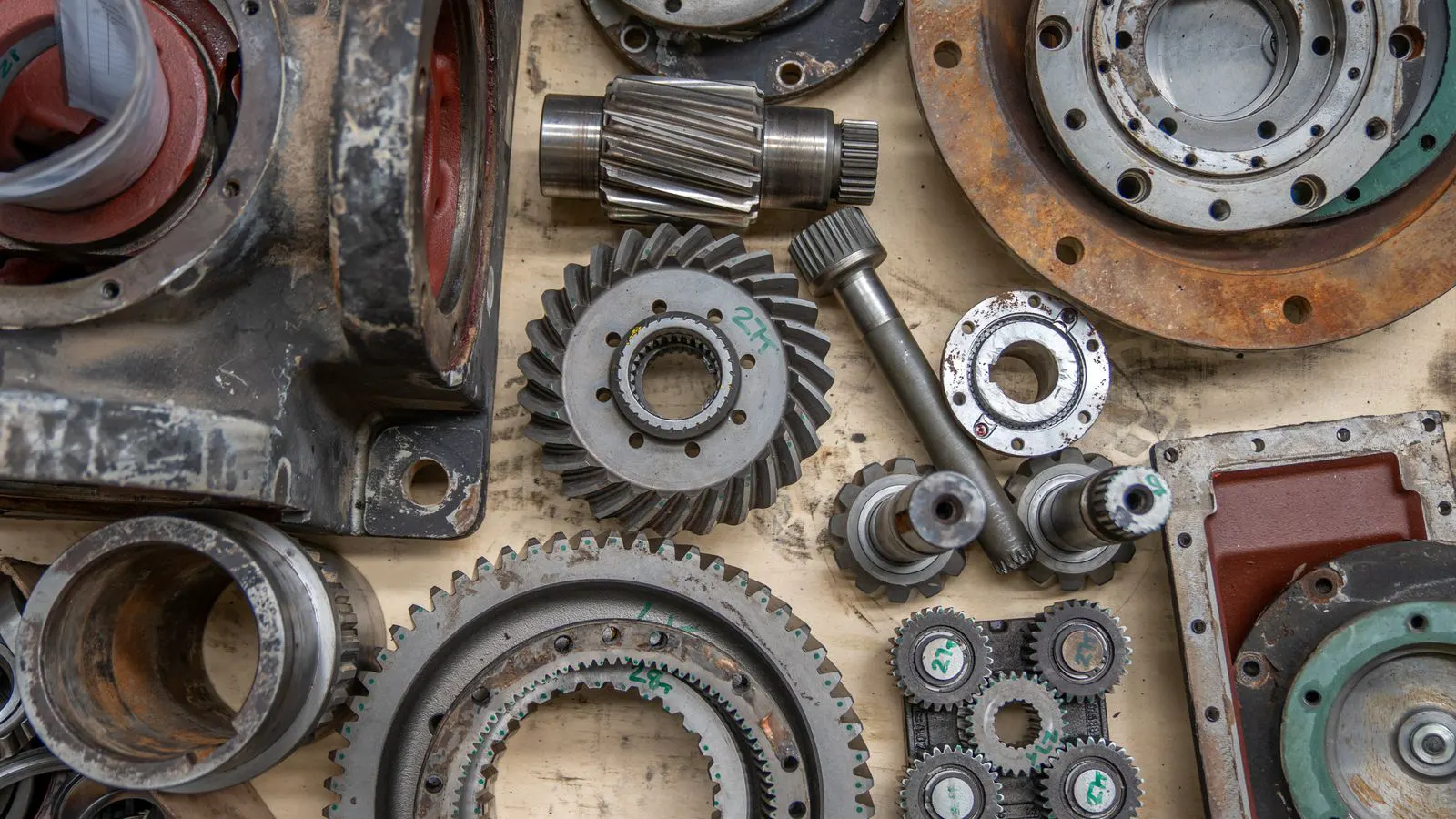
Check the gear mesh. In a planetary gearbox, the sun, planet, and ring gears work together. If one set of teeth shows pitting or scuffing, it indicates that the load was too high, the lubrication was insufficient, or the alignment was off. Note that surface wear on the sun gear often indicates input overload, while wear on the ring gear suggests output side issues or housing distortion.
How do you troubleshoot thermal and lubrication problems?
Thermal failure is often the silent killer of planetary gearboxes. When oil breaks down or temperature rises, the viscosity drops, creating a thin film that cannot separate the metal surfaces. This leads to metal-to-metal contact, rapid wear, and eventual seizure.
Start by checking the lubricant level. Many planetary gearboxes use a sump system where the oil level can drop due to seal leaks or evaporation. Top up with the exact fluid specified by the manufacturer. Never mix different grades of oil, as this changes the viscosity and film strength.
Next, evaluate the cooling system. High torque applications generate significant heat. If the gearbox is in an enclosed space, ensure that the ventilation paths are clear. If the unit is designed for forced oil cooling, check that the pump is running and the cooler is not clogged with debris.
Also, inspect the seals. If oil is leaking onto the gear teeth or mixing with water, the lubrication quality degrades rapidly. Replace any worn seals or gaskets during maintenance. A small leak can lead to a catastrophic failure if it reduces the oil level to a point where the bearings are not submerged.
A troubleshooting table for common symptoms
To speed up your diagnostic process, use the table below to match symptoms to likely causes and actions. This table covers the most frequent issues reported in industrial settings.
| Symptom | Likely cause | What to do |
|---|---|---|
| Grinding noise under load | Gear tooth contact or misalignment | Check alignment; inspect gear teeth for wear |
| High housing temperature | Low oil level or clogged cooler | Check fluid level; clean air filters on cooler |
| Excessive vibration | Worn bearings or loose mounting | Replace bearings; tighten mounting bolts |
| Oil leaks at shaft | Worn or damaged seals | Replace seals; inspect shaft for scoring |
| Stiff manual rotation | Seized bearings or internal damage | Disassemble; replace bearings or gear set |
| Intermittent failure | Thermal cycling or loose connection | Check wiring; ensure thermal breakers are rated correctly |
How does overload contribute to failure?
High torque applications are designed to handle specific loads, but they are not immune to overload events. If the input torque exceeds the rated limit, even briefly, the gear teeth can shear or the bearings can be crushed. This is common during startup when inertia is highest.
Monitor the torque output using a torque transducer or by calculating from the motor power and speed. Compare these values to the gearbox’s rated torque. If you are consistently operating at the upper limit of the rating, consider a larger gearbox or a different gear ratio.
Also, check for shock loads. If the machinery involves sudden stops or starts, the gear teeth are subjected to impact forces. In these cases, ensure that the coupling has sufficient compliance to absorb shock. A rigid coupling will transmit all shock loads directly to the gear teeth, accelerating wear.
Prevention tips for long-term reliability
Prevention is always cheaper than repair. Implement a structured maintenance program that includes regular inspections and fluid changes. Follow the manufacturer’s recommendations for oil change intervals, but adjust them based on your operating conditions. If the gearbox runs hot or in a dirty environment, change the oil more frequently.
Train your maintenance team to recognize early warning signs. A small change in noise or temperature is a signal to investigate, not to ignore. Keep a logbook for each gearbox, recording maintenance actions, oil changes, and any observed anomalies. This history is invaluable when diagnosing recurring issues.
Finally, ensure that the gearbox is protected from external elements. Dust, moisture, and debris can enter the gearbox through seals or openings. Use appropriate enclosures and gaskets. If the environment is harsh, consider using a gearbox with a higher protection rating.
When should you replace the gearbox?
Sometimes, repair is not the most cost-effective option. If the gear teeth are severely damaged, if multiple bearings are worn, or if the housing is cracked, replacement may be the better choice. Calculate the cost of parts and labor for repair and compare it to the cost of a new unit.
If you are replacing the gearbox, ensure that the new unit has the same input and output specs. Also, consider upgrading to a model with better thermal management if you are running at high temperatures. A slightly larger gearbox with a higher service factor may be a better investment in the long run.
By following this guide, you can effectively troubleshoot high torque planetary gearbox failure and restore your equipment to reliable operation. Regular maintenance and attention to operating conditions are the keys to preventing future issues.
Frequently asked questions
What is the most common cause of planetary gearbox failure?
The most common causes are misalignment and poor lubrication. These issues lead to uneven load distribution and metal-to-metal contact, accelerating wear.
How often should I change the oil in a planetary gearbox?
Follow the manufacturer's recommendations, but consider changing it more frequently if the gearbox runs hot or in a dirty environment.
Can a misaligned shaft cause a planetary gearbox to fail?
Yes, even a small amount of misalignment can cause the planetary gears to bind, leading to excessive wear and potential seizure.
What are the signs that a planetary gearbox is overheating?
Signs include high housing temperature, a change in noise, and potentially darkening of the oil. Use an infrared thermometer to check the temperature.
Should I replace the gearbox if the gear teeth are worn?
It depends on the severity. If the wear is minor and the bearings are good, you might be able to replace just the gear set. If multiple components are damaged, replacement may be more cost-effective.