Outlook: Digital Twin Adoption in Reducer Design
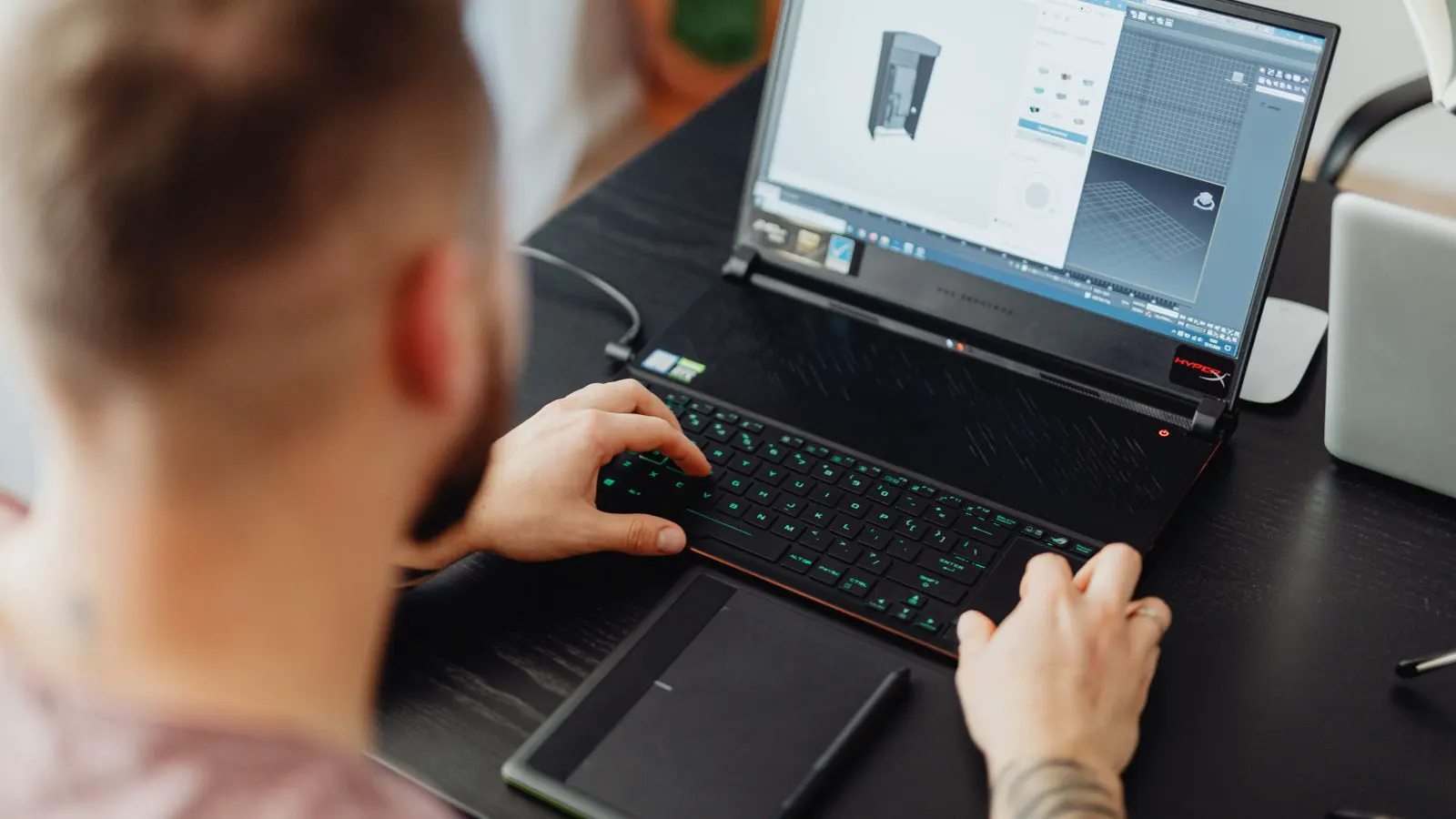
A digital twin is a virtual model that mirrors a physical reducer. It shifts development from late-stage hardware testing to early simulation. Buyers should plan for tighter data requirements, better virtual validation, and closer collaboration with manufacturers.
- Digital twins move testing left. Engineers verify geometry and load paths before casting or machining.
- Buyers should expect manufacturers to request more precise input data for virtual models.
- The value of a virtual model depends on the quality of the underlying physics and load data.
- Standard off-the-shelf reducers will still dominate many applications, but custom designs will benefit most.
- Prepare by documenting duty cycles, mounting conditions, and environmental limits early in the project.
Gearbox and speed reducer development is moving away from a purely physical workflow. For decades, the standard process relied on building a prototype, mounting it on a test stand, and observing the results under load. If the unit passed, it shipped. If it failed, the team adjusted the design and repeated the cycle. This method works, but it is slow and expensive.
A digital twin changes the sequence. It is a virtual representation of the physical reducer that runs in parallel with the hardware. Instead of waiting for a first article to reveal a gear mesh problem, the team can simulate the same forces in a model. The virtual model captures geometry, material properties, and operating loads. When the physical unit is eventually built, the team already knows where to watch closely.
This shift is not a replacement for physical testing. It is a complement. The value lies in reducing the number of physical iterations required to reach a reliable design. For buyers evaluating long-term suppliers or custom reducer programs, this change affects how specifications are written and how data is exchanged.
How the Virtual Model Replaces the Early Prototype
The most immediate shift is the reduction of physical prototypes in the early design phase. A traditional custom gearbox project often starts with a basic 3d model of the housing and gear train. The team runs a basic check for center distance and basic load capacity. Then they cut a prototype housing and machine the gears.
With a digital twin approach, that early 3d model becomes a living simulation. The engineer feeds in the torque curve, the speed range, and the mounting interface. The software calculates stress on the tooth flanks, the load on the bearings, and the thermal expansion of the shafts. The team can run thousands of scenarios without cutting metal.
This is particularly useful for applications with variable loads. A reducer driving a robotic arm, for example, sees torque that changes direction and magnitude constantly. A standard rating might assume a steady state. A digital twin can model the actual duty cycle. It can show whether the gear teeth are overstressed during the peak acceleration phase or if the bearings are undersized for the reverse torque.
Buyers should understand that this capability is becoming standard in serious custom design shops. It is less common in the commodity sector, where units are built to a standard catalog spec. If you are specifying a custom unit, ask how the manufacturer uses simulation. Do not just ask if they can model it. Ask what inputs they need and what outputs they provide.
The Data Requirement Changes
A physical prototype hides data gaps. If the design is vague, the prototype reveals the failure. A digital twin does not hide gaps. It fails differently. If the input data is poor, the output is useless. This is the most significant change for buyers.
The quality of the digital twin is limited by the quality of the inputs. A model that assumes a constant load when the application is cyclic will produce misleading results. A model that ignores the thermal buildup in a high-speed unit will miss bearing fatigue issues.
Buyers need to document their operating conditions more carefully. This means moving beyond a simple nameplate torque value. You need to provide the actual torque-speed profile. You need to specify the mounting method and any misalignment tolerances. You need to define the ambient temperature range and any lubrication constraints.
This is a shift from selling a problem to providing a dataset. In the past, a buyer might say, “I need a 10 hp reducer for a conveyor.” Now, the engineer can model that conveyor. They can simulate the starting shock, the belt tension, and the stop-and-go cycles. The more detail the buyer provides, the more useful the virtual model becomes.
This also changes the procurement document. The technical specification should include a data appendix. This appendix should list the load profile, the environmental limits, and the installation constraints. This data becomes the foundation for the supplier’s simulation. It also serves as the baseline for acceptance testing later.
What Simulation Actually Validates
It is common to overstate what a digital twin can do. It is not a magic box that predicts every failure. It validates specific physical behaviors based on the assumptions built into the model.
The primary areas of validation are structural and thermal. The software can calculate the stress on the gear teeth to see if they will pitting or break. It can check the bearing loads to ensure the L10 life is adequate. It can model heat generation to see if the housing will run too hot for the oil or the seals.
There are limits, however. The model does not predict every manufacturing defect. It does not account for the exact hardness of the steel from a specific heat treatment batch. It does not fully capture the complex fluid dynamics of lubrication in every corner of a housing. It is a tool for risk reduction, not a guarantee of perfection.
The table below outlines what a typical digital twin workflow validates and what it leaves to physical testing.
| Validation Area | What the Digital Twin Checks | What Physical Testing Still Verifies |
|---|---|---|
| Gear Mesh | Tooth stress, contact ratio, load distribution | Actual noise, vibration, and wear patterns |
| Bearings | Radial and axial load, expected life | Real-world fatigue under assembly stress |
| Thermal | Heat generation, oil temperature, housing temp | Actual heat dissipation in the specific installation |
| Housing | Stress concentrations, deformation under load | Casting defects, machining accuracy, assembly fit |
| Dynamics | Resonance frequencies, natural modes | Actual resonance under real operating speeds |
The physical test is still required to verify the final unit. The digital twin narrows the scope of the test. Instead of running the unit for months to find a bearing failure, the team can run a shorter test focused on the specific risks identified in the simulation.
How This Changes Supplier Selection
For buyers selecting a supplier, the digital twin shifts the evaluation criteria. In the past, a supplier’s strength was often measured by their machine shop capability. They had good lathes, good grinders, and good QC.
Now, the engineering capability is the differentiator. A supplier with a strong simulation team can catch design errors before they become expensive. They can offer a design that is optimized for the specific application rather than a standard unit with a high service factor.
When evaluating suppliers, ask specific questions. Do they have a dedicated simulation engineer or do they outsource the modeling? Do they use the simulation to guide the physical test? Can they provide the simulation reports as part of the delivery package?
A mature supplier will treat the digital twin as a risk management tool. They will use it to justify design choices. For example, they might use the model to show that a specific gear profile is necessary to handle the peak load, explaining why a standard tooth form would fail. This transparency builds trust.
It also allows for faster iteration. If a customer asks for a change in torque or speed, the supplier can run the simulation in hours rather than days. They can provide a revised quote and a revised 3d model quickly. This speed in the engineering phase is a major advantage over suppliers who rely on trial and error with physical parts.
Buyers should look for suppliers who communicate the limitations of their models. A good engineer will tell you what the simulation cannot predict. A less experienced team might present the simulation result as an absolute truth. The willingness to discuss model limitations is a sign of engineering maturity.
Preparation for Buyers
How do you prepare your organization for this shift? The primary action is better documentation. Start building a standard format for your reducer requirements. Include the load profile, the environment, and the installation details. Make this document a standard part of your request for quotation.
This does not mean you need to become an engineer. It means you need to provide the facts that the supplier needs to build the model. If you have historical data from existing equipment, provide it. If you have a torque curve from the drive, share it. If you know the ambient temperature in the plant, specify it.
The second action is to define your acceptance criteria based on the simulation. If the supplier provides a simulation report, review it. Check that the inputs match your specification. Check that the safety factors are appropriate. Agree on which parameters will be verified during the physical test.
This creates a shared understanding. You are not just asking for a box that spins. You are asking for a solution that has been verified against your specific operating data. The digital twin makes this possible.
The final action is to manage expectations. The digital twin is a tool, not a replacement for good engineering. A bad design can still fail in a simulation if the inputs are wrong. A good design can still have manufacturing issues. The physical test remains the final gate. The value is in the reduction of risk and the acceleration of the development cycle.
What to Expect in the Near Term
The adoption of digital twins in reducer design is not a single event. It is a gradual integration. Most large manufacturers are already using it for custom designs. The commodity sector is slower to adopt it because the margin is thinner and the standardization is higher.
For standard off-the-shelf reducers, the digital twin will likely be used in the background. The manufacturer will use it to optimize the standard design over time. They will refine the gear profiles and housing shapes based on aggregated data from their models. You will not see a “digital twin” option on a standard catalog. You will just see a better standard product.
For custom and high-performance reducers, the digital twin will become the norm. It will be the default way to develop a new unit. The physical prototype will still be built, but it will be built with much higher confidence. The first physical unit is less likely to be a failure.
Buyers should plan for this. As the technology matures, the cost of a custom reducer may decrease. The engineering time is saved, even if the manufacturing cost is the same. The data exchange will become more standardized. You may find that manufacturers ask for specific data formats to feed their models.
The bottom line is that the digital twin changes the relationship between the buyer and the supplier. It is a move toward a data-driven partnership. The more you can provide about your application, the better the solution you will get. The virtual model is the bridge between your operating data and the physical product.
Frequently asked questions
Does a digital twin replace physical testing for reducers?
No. It reduces the need for early physical prototypes but does not replace the final acceptance test. The physical unit must still be built and run to verify real-world performance.
Do I need to provide simulation data to buy a standard reducer?
Generally, no. Standard reducers are selected based on catalog ratings and service factors. However, providing your load profile helps the supplier confirm the unit is suitable for your specific duty cycle.
What is the main benefit of a digital twin for a buyer?
The main benefit is risk reduction. It allows the design to be validated against your specific operating conditions before any metal is cut, reducing the chance of early failures.
How do I know if a supplier is using a digital twin correctly?
Ask for the simulation report. Check that the inputs match your specification. Look for a discussion of limitations and safety factors. A competent supplier will explain what the model does and does not predict.
Is this technology available for small custom reducers?
Yes. The physics are the same for small and large reducers. The complexity of the model may vary, but the fundamental approach of simulating loads and stresses is applicable across all sizes.