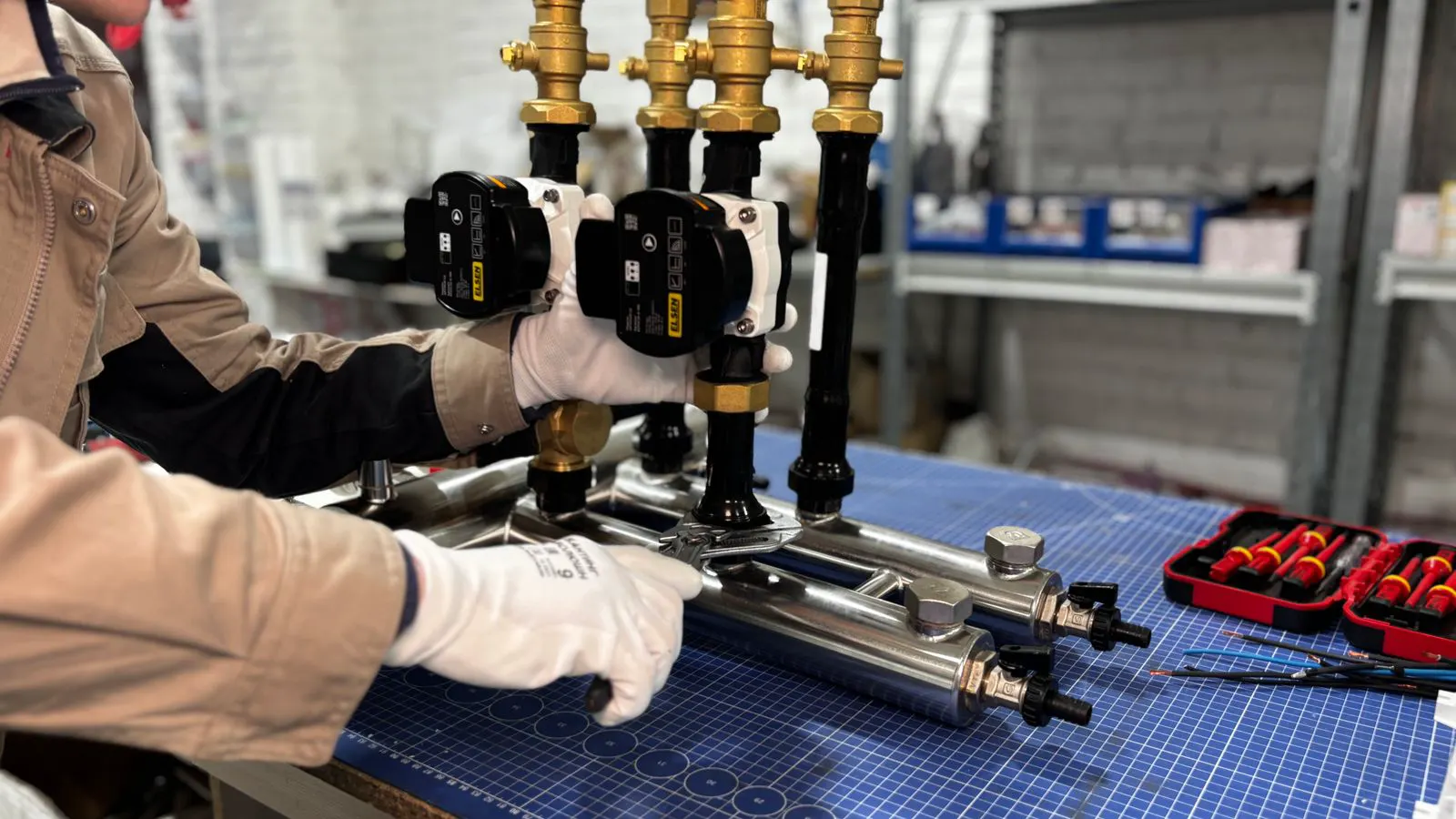
Troubleshooting Gearbox Sizing Errors in Assembly Lines

Gearbox sizing errors on assembly lines cause motor overheating, premature bearing failure, and line stoppages. This guide lists common symptoms, identifies likely mechanical causes, and provides specific fixes. It includes a troubleshooting table for under and overspecified units plus prevention steps for future selections.
- Match peak torque and duty cycle to the reducer rating, not just average speed.
- Use the provided table to match symptoms like motor overheating to specific sizing mistakes.
- Verify the speed ratio and output torque against the line load before installation.
- Document the selection basis to catch errors during design reviews and supplier quotes.
- Recheck the gearbox when the line speed or product weight changes.
Why assembly line gearboxes fail early
A mismatched reducer shows up fast on an automated line. The motor strains, the bearing temperature climbs, and the unit stops before the next shift. Sometimes the opposite happens. The reducer turns smoothly, but the motor runs at a low load point where it wastes power and the control system behaves unpredictably.
Both cases stem from the same source. The selected gearbox does not match the actual mechanical load on the line. The selection process usually starts with a nameplate speed and a rough torque estimate. That is often enough for a prototype. It is not enough for a continuous production run.
This article treats the gearbox selection guide as a diagnostic tool. It walks through the symptoms of a wrong-sized unit, lists the likely causes, and gives the fixes that work on the floor.
Symptom by symptom troubleshooting table
The table below covers the most common failures tied to under or over specification. Use it to narrow down the cause before ordering a replacement.
| Symptom | Likely cause | What to do |
|---|---|---|
| Motor overheats during normal operation | Reducer output torque is below the line load, forcing the motor to run at high current | Recalculate torque with the actual duty cycle and peak load. Select a reducer with a higher rated output torque. |
| Reducer is warm but motor current is low | Reducer output torque far exceeds the load, pushing the motor into a low efficiency region | Choose a lower torque rating. A smaller frame or a different speed ratio may fit the line better. |
| Intermittent slipping or stalling at the start of the shift | Peak torque requirement is not met during acceleration or jam events | Check the torque calculation method. Add a safety factor for starting torque and jam resistance. |
| Unusually low speed at the output shaft | Selected speed ratio is too high for the application, or the motor base speed is lower than assumed | Verify the motor nameplate speed. Re-select the ratio to hit the target output speed. |
| Excessive vibration and noise | Mismatched shaft alignment or a reducer with a ratio that does not suit the load profile | Check alignment. If alignment is correct, review whether the ratio produces a smooth load profile or creates periodic shock. |
| Bearing wear after a short service life | Continuous duty cycle exceeds the reducer rating, or the load is heavier than the design case | Recalculate the duty cycle. Move to a reducer rated for continuous load, or reduce the line speed to lower the cycle count. |
How under specification presents itself
An under-specified reducer puts the motor into a high-load region. The motor may still turn, but it draws current near or above its continuous rating. The thermal protection may not trip immediately, but the winding temperature rises. Over time, insulation degrades and the motor life drops.
The reducer itself sees shock loads that it was not designed to handle. The output shaft may show wear at the coupling or the gear teeth. The bearings run hot because the load exceeds the static and dynamic ratings.
Look for these signs:
- Motor temperature above the nameplate rating during normal production.
- Reducer output shaft temperature higher than the motor housing.
- Noise that increases with load, especially at the start of acceleration.
- Frequent trips on the current limiter or thermal relay.
The fix is usually to increase the rated torque. Do not simply add a larger motor. That masks the problem and may overload the reducer frame. The correct move is to select a reducer with a higher torque rating and a proper safety factor for the line load.
How over specification presents itself
An over-specified reducer is harder to catch. The unit may run for years without failure. But the cost is real. The motor may sit at a low load point, where efficiency drops and the control system may not regulate speed smoothly. The line may also have a speed mismatch if the ratio was chosen without checking the output.
Over specification also inflates cost. A larger frame reducer costs more, takes more floor space, and may require a stronger base. The lead time for import can increase. The maintenance team may struggle to find replacement parts for a unit that was selected on the high end.
Common signs include:
- Motor current well below the rated value during steady operation.
- Output speed lower than the target because the ratio was too high.
- Unnecessary vibration if the alignment is marginal, since a heavier unit transmits more dynamic force.
- Higher purchase price and longer lead time than the line actually needs.
The fix is to re-check the torque and speed requirements. Use the actual line speed, not the maximum capability of the conveyor. Use the real product weight, not the maximum test weight. Select the smallest reducer that meets the continuous and peak torque with the required safety factor.
Duty cycle and torque errors on the line
The most common sizing mistake is using average torque instead of the peak torque. A line that runs at a constant speed for most of the cycle may have a short burst of high torque during acceleration or when a product jam occurs. If the reducer is sized only for the average, it will fail during the burst.
The second mistake is ignoring the duty cycle. A reducer rated for intermittent duty may be acceptable for a line that stops every few minutes. It is not acceptable for a line that runs continuously. The duty cycle calculation should include the on time, off time, and the load profile for each cycle.
When the duty cycle is wrong, the bearing temperature rises. The lubricant breaks down faster. The failure mode is usually bearing wear or gear tooth pitting rather than a sudden shaft break.
Check the duty cycle against the reducer rating. If the line runs longer than the rated duty, select a unit with a higher continuous rating. If the line has short bursts, check the peak torque rating and the starting torque capability.
Speed ratio and output mismatch
A separate error is the speed ratio. The reducer ratio determines the output speed. If the ratio is too high, the output speed falls below the target. If the ratio is too low, the output speed exceeds the target and the motor may run above its rated speed.
On assembly lines, the speed ratio is often chosen to match a conveyor speed. The conveyor speed may be set by the product cycle time. If the product cycle time changes, the ratio may need to change too. A fixed ratio that worked for a slow line may be wrong after a speed-up.
Check the output speed formula against the actual motor speed and the line requirement. If the motor speed varies, use the average speed for the selection and confirm that the peak speed stays within the reducer and motor limits.
A wrong ratio can also hide a torque error. If the ratio is too high, the torque at the output increases, which can mask an under-rated motor. If the ratio is too low, the torque drops, which can make a properly rated reducer look like it is over-specified.
Preventing sizing errors before the line runs
Prevention is cheaper than failure. The best way to avoid a wrong-sized reducer is to lock in the selection basis before the quote is issued.
Use a documented selection basis. Record the motor nameplate speed, the line speed, the product weight, the acceleration time, and the duty cycle. Include the safety factors used for torque and speed. If the line changes, update the document.
Run a torque calculation with the actual load profile. Do not rely on a generic estimate. If the line has a peak load, size the reducer for that peak with a margin. If the line runs continuously, use a continuous duty rating.
Verify the speed ratio against the target output speed. Confirm that the motor stays within its speed range. Check that the reducer output speed matches the conveyor or actuator speed.
Review the selection with the supplier. Send the calculated torque, speed, and duty cycle. Ask the supplier to confirm that the selected unit meets those values with the stated safety factors. If the supplier suggests a larger unit, ask why. If they suggest a smaller unit, ask why.
Finally, keep the selection document with the line maintenance records. When a new operator or engineer takes over the line, they can see why the reducer was chosen. They can also spot when the line changes and the selection may no longer fit.
When to replace versus adjust
Not every symptom requires a new reducer. Some issues can be fixed by adjusting the line or the motor.
If the motor is overheating but the reducer is warm, the problem may be the motor size or the duty cycle. Check the motor nameplate against the actual current. If the current is too high, the motor may be under-sized for the load. If the reducer is also warm, the reducer torque rating is too low.
If the output speed is wrong but the torque is fine, the ratio is the issue. A fixed ratio may need to be replaced with a variable ratio or a different fixed ratio. In some cases, changing the motor speed or the conveyor speed can bring the line back into range.
If the failure is bearing wear, the root cause is usually duty cycle or load profile. Replacing the bearing without changing the selection will lead to another failure. Fix the load first.
A new reducer is the correct fix when the torque rating is wrong, the speed ratio is wrong, or the duty cycle rating is wrong. In those cases, adjustment will not solve the problem. The unit must be re-selected with the correct ratings.
Frequently asked questions
How do I know if my assembly line gearbox is under-specified?
Look for motor overheating, high current draw, and reducer bearing temperatures above normal. If the unit stalls or slips during acceleration, the torque rating is likely too low.
What is the first step when a gearbox fails on a line?
Check the motor current and the reducer temperature. Then review the torque and duty cycle calculations. Compare them to the actual line load before ordering a replacement.
Can I just install a larger motor to fix a sizing error?
No. A larger motor may mask the reducer torque problem and can overload the frame or coupling. Fix the reducer rating first, then check the motor size.
How does duty cycle affect gearbox selection?
A higher duty cycle means the unit runs longer per cycle. If the line runs continuously, select a reducer rated for continuous duty. If the line stops often, an intermittent duty unit may be acceptable.
What should I document to prevent future sizing errors?
Record the motor speed, line speed, product weight, acceleration time, duty cycle, and the safety factors used. Keep this document with the maintenance records and update it when the line changes.