Synchronous vs Herringbone Gears: Which Fits Your Load?
Synchronous gears excel at high-torque, low-speed applications with strict efficiency requirements, while herringbone gears offer superior axial load handling. The choice depends on your specific load profile, space constraints, and noise tolerance.
- Synchronous gears use profile shifting to eliminate sliding and reduce friction losses.
- Herringbone gears feature angled teeth that cancel axial thrust forces.
- Match tooth geometry to your primary load direction and speed range.
- Consider manufacturing tolerances when selecting high-precision gear types.
How tooth geometry affects gearbox performance
When selecting a gearbox for a specific application, the shape of the gear teeth is often the deciding factor. Two of the most common approaches for handling high loads are synchronous gears and herringbone gears. While both designs improve upon standard spur gears, they solve different engineering problems. Understanding the mechanical differences between these two types is essential for making an informed choice.
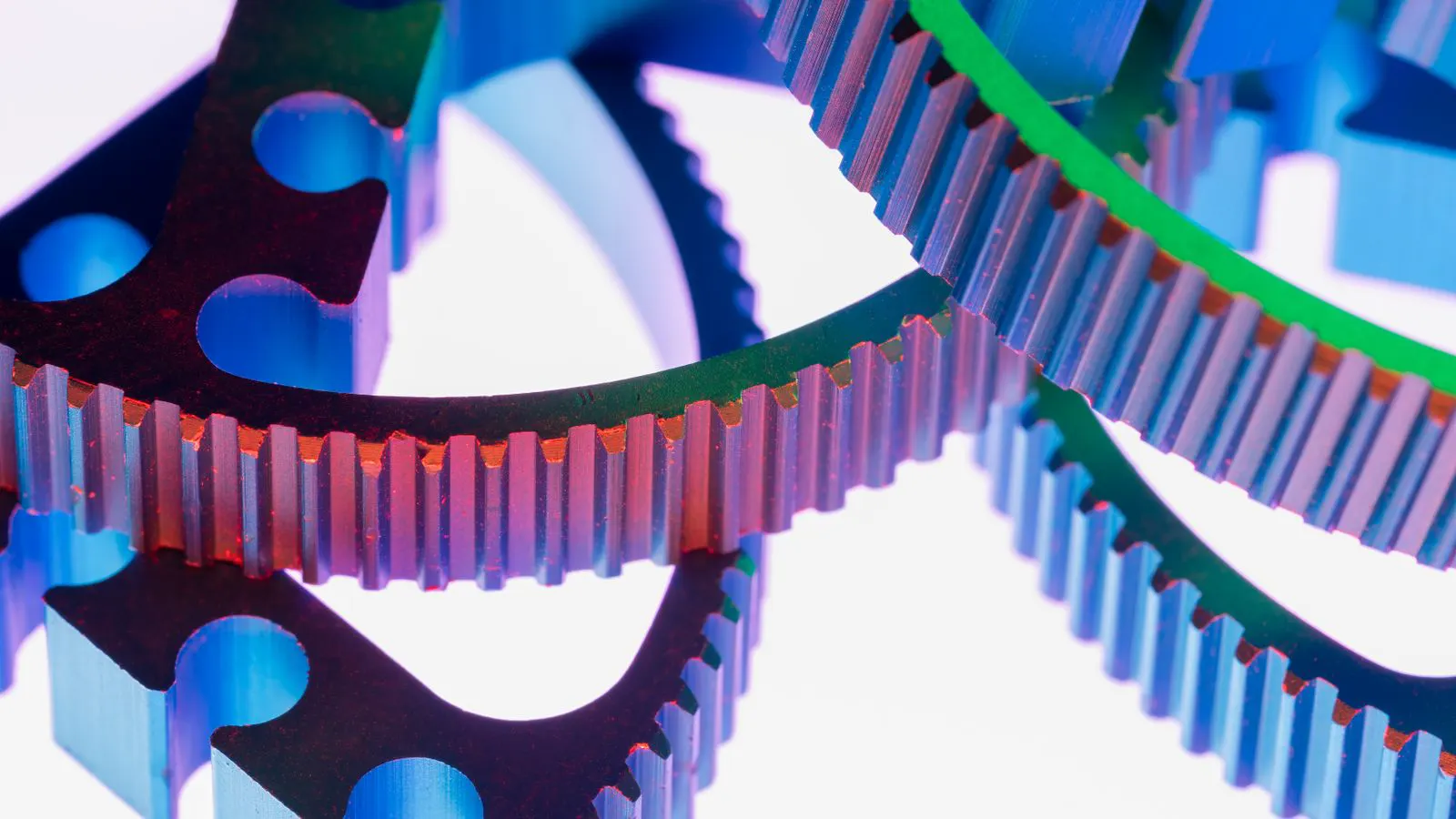
Synchronous gears, also known as profile shifted gears, rely on a precise offset in the tooth profile to ensure that the point of contact remains stationary relative to the gear surface. This design minimizes sliding motion between teeth. In contrast, herringbone gears, or beveled spur gears, use a double-angled tooth profile. This configuration creates two sets of teeth that lean in opposite directions, allowing the gear to handle forces pushing the gear along its shaft axis without excessive wear.
The choice between these two types is not arbitrary. It is driven by the nature of the load, the required efficiency, and the physical constraints of the machinery. A misaligned selection can lead to premature failure, increased vibration, or unnecessary energy consumption.
What are the mechanical differences?
The fundamental difference lies in how each design manages friction and force distribution. Synchronous gears operate on the principle of rolling contact. By shifting the profile, the pitch point becomes a pure rolling point rather than a combination of rolling and sliding. This reduces the coefficient of friction at the interface. The result is lower heat generation and higher transmission efficiency. This makes them ideal for applications where energy loss is a critical concern.
Herringbone gears, however, focus on load distribution. The angled teeth create a contact patch that spans a larger area of the gear face. This distributes the tangential and radial loads more evenly. More importantly, the opposing angles of the two tooth sets generate equal and opposite axial forces. These forces cancel each other out, significantly reducing the stress on the bearings and the housing structure.
In terms of material usage, synchronous gears require higher precision in the tooth profile. The shift amount must be calculated accurately to prevent interference. Herringbone gears, while also requiring precision, have more forgiving manufacturing tolerances in some axial directions, though they are sensitive to alignment errors.
Comparison of load capabilities
When evaluating load capacity, it is helpful to look at the specific type of force the gearbox must withstand. Synchronous gears are generally stronger in handling pure tangential loads, which are the primary forces generated during standard rotation. Their high efficiency allows them to deliver more output torque for a given input power, effectively increasing their usable load capacity.
Herringbone gears are superior when the application involves significant axial loads. This often occurs in conveyor systems, screw drives, or applications where the load is applied at an angle to the shaft. The self-canceling nature of the herringbone teeth means that the gearbox can absorb these axial forces without requiring additional thrust bearings or complex housing reinforcements.
| Option | Best for | Limitations |
|---|---|---|
| Synchronous | High efficiency, high torque, low noise | Sensitive to profile shifting errors; higher manufacturing cost |
| Herringbone | Axial loads, wide face widths, vibration control | Requires precise alignment; more complex to repair |
| Standard Spur | Low speed, low load, simple designs | High noise; limited axial load handling |
| Helical | Moderate loads, smooth operation | Generates axial thrust; requires thrust bearings |
The table above summarizes the general trade-offs. Note that “best for” does not imply the option is perfect, only that it addresses the primary challenge of the application more effectively than the others.
Noise and vibration considerations
Noise is a significant factor in industrial environments, particularly in urban areas or inside buildings. Synchronous gears are often quieter than standard spur gears due to their reduced sliding action. The smoother rolling contact results in less impact noise. However, if the profile shift is incorrect, synchronous gears can actually produce higher noise levels due to interference or misalignment.
Herringbone gears also contribute to noise reduction. The multiple contact points and the distribution of load across the tooth width help to dampen vibrations. The overlapping action of the herringbone teeth ensures that there is always a continuous contact area, preventing the abrupt disengagement seen in simpler gear types.
Both gear types benefit from proper lubrication. The specific viscosity of the oil must match the operating temperature and load. For synchronous gears, a slightly thicker oil may be beneficial to maintain the film thickness required for smooth rolling. For herringbone gears, the oil must be capable of handling the shear forces generated by the angled teeth.
Application fit for different industries
In the chemical processing industry, where efficiency and heat generation are critical, synchronous gears are often preferred. The reduced friction helps maintain process temperatures and reduces the energy cost of driving pumps and mixers. In these environments, the gearbox must also be corrosion-resistant, which may influence the choice of materials more than the gear type itself.
For mining and heavy machinery, herringbone gears are frequently used. These applications involve massive loads and often involve axial forces from conveyor belts or crusher hammers. The ability of herringbone gears to handle these forces without excessive bearing wear makes them a robust choice. They are also common in marine propulsion, where the thrust loads can be substantial.
In the automotive sector, while not typically referred to as “synchronous” in the same industrial sense, the principles of profile shifting are used in transmission gears to improve shift quality and efficiency. Herringbone concepts are less common here due to space constraints but are used in some heavy-duty truck transmissions to manage axial loads.
How to choose the right gear type
Selecting between synchronous and herringbone gears requires a systematic approach. First, analyze the load profile. Determine the magnitude of the tangential, radial, and axial forces. If axial forces are significant, herringbone gears are the logical choice. If the primary concern is efficiency and torque transmission with minimal heat, synchronous gears are better suited.
Second, consider the speed and size of the gearbox. Herringbone gears are often used in larger gearboxes where face width is available. Synchronous gears can be used in a wider range of sizes but require precise manufacturing. Check the available space in the housing. Herringbone gears may require a wider face, which can limit the length of the gearbox.
Third, evaluate the maintenance requirements. Synchronous gears are sensitive to wear and profile changes. Regular inspection of the tooth profile is necessary to ensure that the shift remains accurate. Herringbone gears are also sensitive to alignment, but their failure modes are often more predictable and easier to diagnose.
Finally, consult with a gearbox design engineer. While the guidelines above provide a framework, the specific interaction between the gear type and the overall system design can be complex. An engineer can simulate the loads and recommend the optimal geometry for your specific application.
Final thoughts on gear selection
The choice between synchronous and herringbone gears is a balance of performance, cost, and complexity. Synchronous gears offer high efficiency and low friction, making them ideal for applications where energy consumption is a primary cost driver. Herringbone gears provide superior load distribution and axial force handling, making them the preferred choice for heavy-duty and multi-directional load applications.
There is no single “best” gear type for all scenarios. The ideal selection depends on the specific requirements of the machine. By understanding the mechanical principles behind each design, you can make a more confident decision. Always prioritize a thorough load analysis and consult with qualified engineers to ensure the gearbox is designed for longevity and reliability.
Frequently asked questions
Can synchronous gears be used in high-speed applications?
Yes, but they require precise manufacturing tolerances to ensure smooth operation at high speeds. The reduced sliding action helps maintain efficiency even at higher rotational speeds.
Do herringbone gears require more oil than standard spur gears?
Not necessarily more by volume, but they often require a specific viscosity to handle the shear forces. The oil must be capable of maintaining a sufficient film thickness across the angled tooth contact area.
Is it possible to replace herringbone gears with helical gears?
In some cases, yes, but you would need to add thrust bearings to handle the axial load. This increases complexity and cost, making herringbone gears a more efficient solution for high axial loads.
How does the profile shift affect the backlash in synchronous gears?
The profile shift is calculated to ensure that the backlash is optimal for the application. It must be balanced to allow for thermal expansion and manufacturing tolerances without causing noise or impact.
Which gear type is generally more expensive to manufacture?
Synchronous gears are often more expensive due to the need for highly precise profile shifting and tighter tolerances. Herringbone gears also require precision but may have slightly more forgiving tolerances in some dimensions.